机构中心/ CENTER
热门关注/ FOCUS
- 知名高校成都行科技成果对接大会在蓉举办
- 奇异果合作:中国和新西兰打造全球成功故事
- 我院跨境研究工作取得丰硕成果
- 川观新闻:国家一级保护植物光叶蕨现身瓦屋山
- 川观新闻:国家一级保护植物光叶蕨现身瓦屋山
- 猕猴桃有辣的、欧洲也有“九寨沟”……探访科技“一带一路”交流成果
- 锦观新闻:丝路“新”朋友|携手共进 向世界输送幸福的“甜蜜果”
- Global Times:Nearly extinct magnolia species returns to Sichuan after rescue efforts
- 新华社:“植物大熊猫”峨眉拟单性木兰在野外回归点首次开花
- 四川观察:比预期早10年,峨眉“熊猫花”首次在回归地绽放!
- 四川林草:新华社|“植物大熊猫”峨眉拟单性木兰在野外回归点首次开花
- 微峨眉:比预期早10年!峨眉“熊猫花”首次在回归地奇迹绽放
- 四川日报:我院牵头建立的四川朱鹮种群后代首次放飞野外
- 沐川发布:飞天入水 神秘鸟类首现沐川
- 科技日报:高校院所产业对接交流活动在四川成都举行
- 川观新闻:破解科技成果“养在深闺无人识” ,这场活动给了启示
- 中国日报国际版:中国—新西兰猕猴桃联合实验室揭牌十周年取得丰硕成果
- 十年来,这个实验室突破多项猕猴桃育种关键技术
随机推荐/ RANDOM
- 知名高校成都行科技成果对接大会在蓉举办
- 奇异果合作:中国和新西兰打造全球成功故事
- 我院跨境研究工作取得丰硕成果
- 川观新闻:国家一级保护植物光叶蕨现身瓦屋山
- 川观新闻:国家一级保护植物光叶蕨现身瓦屋山
- 猕猴桃有辣的、欧洲也有“九寨沟”……探访科技“一带一路”交流成果
- 锦观新闻:丝路“新”朋友|携手共进 向世界输送幸福的“甜蜜果”
- Global Times:Nearly extinct magnolia species returns to Sichuan after rescue efforts
- 新华社:“植物大熊猫”峨眉拟单性木兰在野外回归点首次开花
- 四川观察:比预期早10年,峨眉“熊猫花”首次在回归地绽放!
- 四川林草:新华社|“植物大熊猫”峨眉拟单性木兰在野外回归点首次开花
- 微峨眉:比预期早10年!峨眉“熊猫花”首次在回归地奇迹绽放
- 四川日报:我院牵头建立的四川朱鹮种群后代首次放飞野外
- 沐川发布:飞天入水 神秘鸟类首现沐川
- 科技日报:高校院所产业对接交流活动在四川成都举行
- 川观新闻:破解科技成果“养在深闺无人识” ,这场活动给了启示
- 中国日报国际版:中国—新西兰猕猴桃联合实验室揭牌十周年取得丰硕成果
- 十年来,这个实验室突破多项猕猴桃育种关键技术
- 这个实验室,十年成绩单
- 建成世界最大的红肉猕猴桃种质资源圃!这个实验室展示10年“成绩单”
- 让创新的味道在丝路愈久“猕”香 中国—新西兰猕猴桃联合实验室揭牌十周年工作座谈会召开
- 建成世界最大的红肉猕猴桃种质资源圃!这个实验室展示10年“成绩单”
我院跨境研究工作取得丰硕成果
来源:本站 发布时间:2025-12-31 浏览: 0次
Cross-border research work bearing fruit
Xi's visit to New Zealand in 2014 led to enduring cooperation and innovation
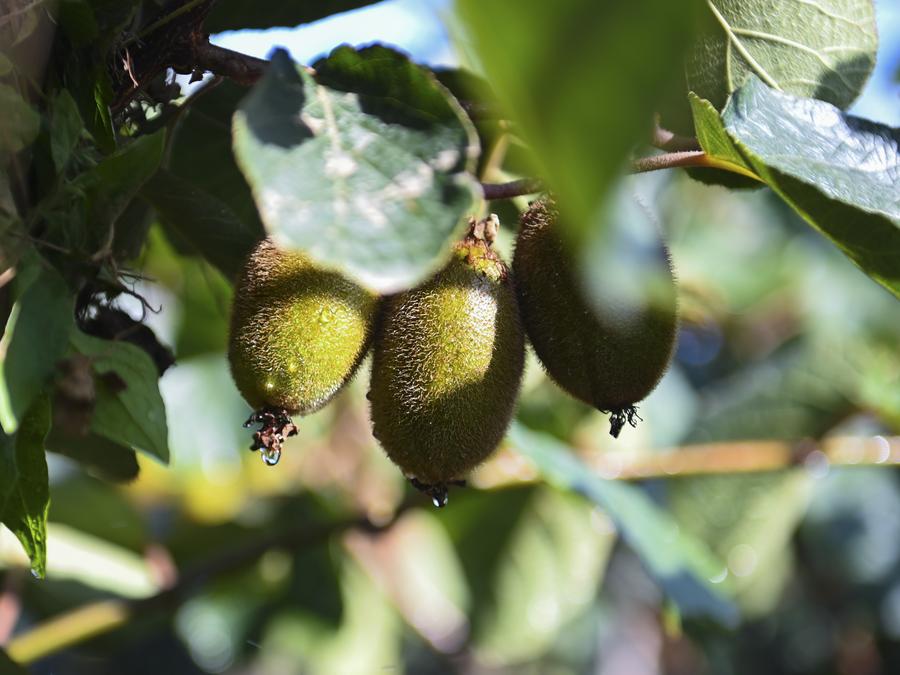
New Zealand kiwifruit scientist Sarah Pilkington has been working with Chinese colleagues to protect the fruit's genetic resource materials and cultivate diversity, a collaboration that is grounded in President Xi Jinping's 2014 state visit to New Zealand.
The establishment at that time of a China-New Zealand kiwifruit virtual joint laboratory by the Sichuan Provincial Academy of Natural Resource Sciences and the New Zealand Institute for Plant and Food Research is among the cooperation projects that resulted from that visit.
During the visit, China and New Zealand signed a series of cooperation agreements and achieved a slew of concrete outcomes regarding exchanges in the fields of agriculture, culture, science and technology, trade, tourism and education, including the kiwifruit virtual joint laboratory.
At the lab in Auckland, Pilkington now leads a team that uses molecular technologies to cultivate new kiwifruit varieties, or cultivars, at the Plant and Food Research group of the New Zealand government's Bioeconomy Science Institute.
The lab focuses on research that is mutually beneficial, said the award-winning scientist, adding that the two sides hold regular exchanges, such as training and visits, that contribute further to knowledge sharing and research collaboration.
"Kiwifruit originated in China. … We want to help our Chinese colleagues protect what material is there and the diversity in it for the future," Pilkington said, referring to the fruit's germplasm, the genetic resources, such as seeds, tissues and cells, that are maintained for breeding, preservation and research.
Researchers from Sichuan province who are involved in the joint lab have also hailed its achievements in preserving germplasm resources, breeding new varieties and promoting them, helping to develop the sector in countries involved in the Belt and Road Initiative through kiwifruit cultivation technologies.
Liverpool Zhang, a relationship and development manager at Plant and Food Research (Greater China), said, "We're also leveraging the partnership to work with others, to maximize the benefits and potential to China and the global kiwifruit sector."
The joint lab unveiled during President Xi's visit 11 years ago continues to have an impact on the industry and beyond, he said.
Its Bioeconomy Science Institute international joint laboratory platform and links also mean that the New Zealand side is able to enjoy "intangible benefits, because that means we can do more work, and they have more people and more resources. It makes our partnership stronger", Zhang said.
During the 2014 trip, Xi met with then-New Zealand governor-general Jerry Mateparae and then prime minister John Key, and the two sides decided to upgrade the China-New Zealand relationship to a comprehensive strategic partnership.
A joint statement between the two sides noted that they had enjoyed a comprehensive cooperative relationship since the early 2000s, as well as "four firsts": New Zealand was the first developed country to conclude bilateral negotiations on China's accession to the World Trade Organization, in August 1997; the first to recognize China as a market economy, in April 2004; the first to begin free trade agreement negotiations with China, in December 2004; and the first to conclude a free-trade agreement with China, in April 2008.
The two sides aimed for a target of NZ$30 billion ($17.5 billion) in bilateral trade by 2020, according to the statement, and they noted that China had become the largest goods trading partner of New Zealand for the first time in 2013.
According to New Zealand authorities, despite the impact of the COVID-19 pandemic, the country's total value of exports to China reached NZ$19 billion in 2020, while imports from China reached NZ$13.8 billion that year, far exceeding the goal set during the visit, Xinhua News Agency reported.
New Zealand's exports to China totaled NZ$20.85 billion in 2024, with goods including kiwifruit and dairy items such as milk powder, butter and cheese accounting for NZ$17.75 billion.
Riding wave of success
Dairy products have ridden the wave of success from President Xi's 2014 visit, with a major memorandum of understanding signed between Chinese dairy giant Yili Group and New Zealand's Lincoln University.
The 2014 memorandum of understanding, which was renewed in April, led to the establishment of the Yili Innovation Centre Oceania at the university in Christchurch, New Zealand.
Philip Wescombe, who leads the innovation center, said the move provides the opportunity to collaborate with dairy experts in nutrition in New Zealand as well as Australia and beyond. "We get to identify leaders in the field who are really pushing the boundaries," he said.
The Yili Innovation Centre Oceania has since been involved in breakthrough research with major global health implications, such as work on sustainable farming practices, becoming a hub for research collaboration across Oceania by using Lincoln University as a base and positioning it as a key player in regional dairy innovation.
Christine Jasoni, a professor and dean of the faculty of agriculture and life sciences at Lincoln University, said the university's research "finds solutions which are going to be developing products that people want to buy, but in a sustainable way". "One of the things that we're quite keen to do is to continue to develop our relationship with China," Jasoni said.
"What we have to offer is innovation in agricultural space. We're working with a number of universities around China, mostly agricultural universities, because we obviously have a lot of synergies there," she said.
During his visit, President Xi went to the booths of the Agricultural and Animal Husbandry Technology Exhibition of New Zealand in Auckland, accompanied by then prime minister Key. Xi pointed out that agriculture and animal husbandry are an important part of China-New Zealand cooperation and expressed his hope that the enterprises of the two countries would strengthen cooperation and achieve win-win outcomes.
At Lincoln University, Pablo Gregorini, a professor of livestock production and agricultural systems, leads groundbreaking research with the Yili innovation center that demonstrates how greater botanical diversity in pastures can transform the future of dairy in both China and New Zealand.
"We're producing healthier milk, we have healthier cows, cows that literally, based on the measurements we've done … even sleep differently in the field," said Gregorini, whose fieldwork covers North China's Inner Mongolia autonomous region.
New Zealand's Bioeconomy Science Institute also has a presence at the university, which means that the Yili Innovation Centre Oceania is able to draw further on the country's research network and resources.
The institute's chief executive officer, Mark Piper, said it has "deep and enduring links with China, built on decades of scientific collaboration and shared innovation. From dairy to horticulture, our partnerships have shaped research that benefits both nations." The memorandum of understanding that resulted from President Xi's 2014 visit has enabled "joint dairy-specific research projects focused on sustainability, environmental performance and value-added agri-foods", Piper said.
"I congratulate Lincoln University and Yili on recommitting to their partnership," he added. "Their journey reflects ours — both inspired by President Xi's visit in 2014 and both focused on building enduring relationships that deliver innovation and mutual benefit."
Contact the writers at alexishooi@chinadaily.com.cn
信息来源:CHINADAILY